
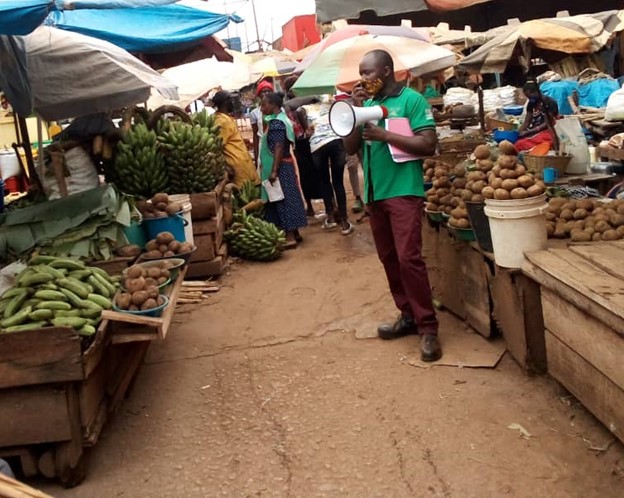
By: Henry Bugembe
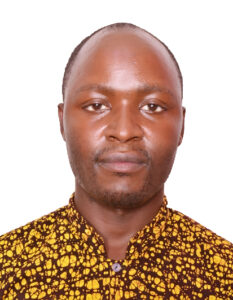
Henry Bugembe is a dedicated Community Health Worker (CHW) based in Nakawuka Village, Kajjansi Town Council, Wakiso District, Uganda, where he has served since 2005. He has also served as a CHW Coordinator for over 2,800 CHWs across the district since 2015. Henry is a certified Master of Ceremonies for events including traditional weddings, parties and community events, as well as a Parish Leader under the Buganda Kingdom. His passion is to ensure that everyone in his community lives a healthy life. He is also a strong advocate for the recognition of CHWs and the improvement of their working conditions.
My call to action is for governments to invest more in CHWs and CHW programs in order for us to do our jobs effectively.
I serve as the Community Health Worker (CHW) Coordinator in Wakiso District, central Uganda. I oversee more than 2,800 CHWs across 720 villages in 27 town councils and sub-counties, while continuing to serve my own community as a CHW. I am sharing my experience working in a low-resource setting to inspire fellow CHW Coordinators in similar environments and to help responsible stakeholders understand the realities we face in fulfilling our roles. Wakiso District has a population of over 3 million people, and it is our duty as CHWs to promote and maintain good health at the household level. As a coordinator, I ensure that all information, materials, and directives from the District Health Office reach every CHW across the district. I am also responsible for the smooth implementation of all government programs that involve CHWs, ensuring that every household is reached. In addition to coordination activities, I also help resolve disputes among CHWs, support project implementation by partners, participate in health campaigns, and guide CHWs on different occasions.

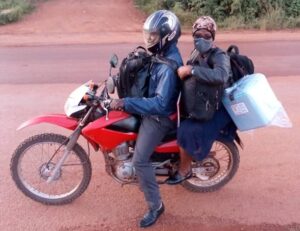
One of my biggest challenges is the lack of financial support and resources to carry out my responsibilities. I receive no salary or transportation allowance for my coordination work, nor do I get airtime support to cover the costs of mobile phone calls, yet I am expected to keep all CHWs in the district informed and mobilized for various health programs. Recently, the Nottingham Trent University (NTU), UK – Makerere University (Mak), Uganda partnership donated a motorcycle to support my work. I use this motorcycle to travel across the district for coordination activities and sometimes to transport CHWs to community outreaches, especially in hard-to-reach areas like islands and the rural areas of the district. While this has been so helpful, I still struggle to afford fuel and repairs, which limits its consistent use.
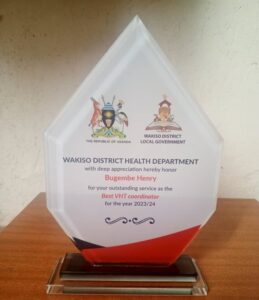
Despite the many challenges, I remain committed to my work. In fact, in 2023, I was recognized as the CHW of the Year by the Wakiso District leadership, and I have also represented CHWs at several local and international conferences. Through my involvement with implementing partners (IPs) (organizations that are carrying out specific tasks or projects partnering with the government), I have gained valuable skills in qualitative and quantitative data collection such as using photovoice, community mobilization, stakeholder engagement, communication, and public speaking. I am grateful to the IPs that have empowered us with knowledge, facilitated our participation in their projects, and sponsored our attendance at workshops and conferences. I also appreciate the Wakiso District leadership for inviting these partners and allowing us to work with them.
However, I believe the government needs to recognize the challenges we face as CHWs and provide routine allowances and remuneration to support our responsibilities. I was recently surprised when, instead of strengthening and compensating existing CHWs, the government introduced a new cadre, the Community Health Extension Workers (CHEWs), to supervise us, offering them pay. During their recruitment, many experienced CHWs were left out due to not meeting the academic requirements, which was unfair and demoralizing.
The top-down decision-making approach used by government officials often excludes CHWs from discussions that directly impact our work. We should be involved in these decisions. We also face challenges with recognition in the community, as we lack official identifiers such as uniforms or identity (ID) cards. We often rely on T-shirts and coats donated by partners to identify ourselves while working. A promising project by the NTU-Mak partnership to provide CHWs with IDs and T-shirts was unfortunately cut short by the COVID-19 pandemic when only a few CHWs in the district had received their ID cards. I hope the government will revive and support this initiative.
The dedication and resilience of CHWs and coordinators like me in Uganda should inspire others, especially those working in similar low-resource settings. Personally, this journey has made me more resilient, resourceful, and deeply passionate about the health of my community. I have also seen positive changes among the CHWs I coordinate, becoming more organized, motivated, and impactful. Today, Wakiso District is recognized as having some of the most hardworking CHWs in the country, and this gives me hope that with more support, we can achieve even greater impact.
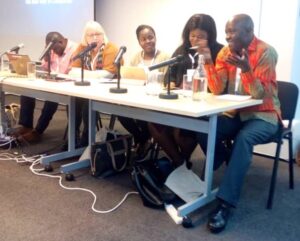
I call upon all countries with CHWs, especially in low-income settings, to recognize their contributions and consider us as an essential part of the healthcare system. We are the first line of service delivery, bridging the gap between communities and health facilities. Without proper financial support and involvement in decision-making processes, our ability to serve effectively is greatly limited. Governments and policymakers must invest in CHWs, not only by appreciating our work, but also by providing the materials and supplies, recognition, and financial support we need to sustain our efforts.